Beyond the Gallery put UJ architecture students’ answers on show at Keyes Art Mile
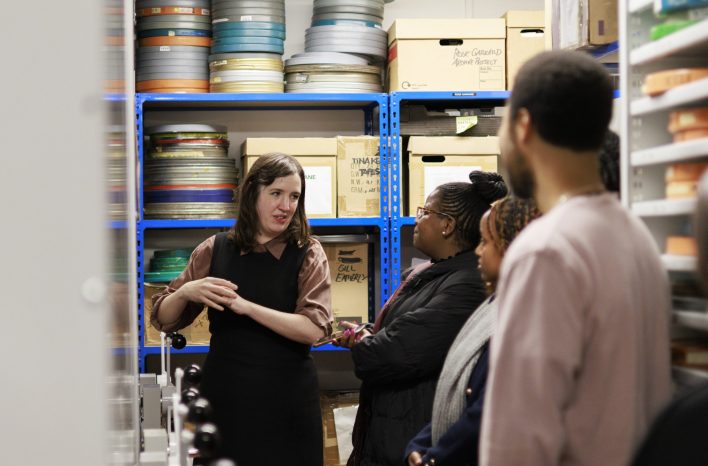
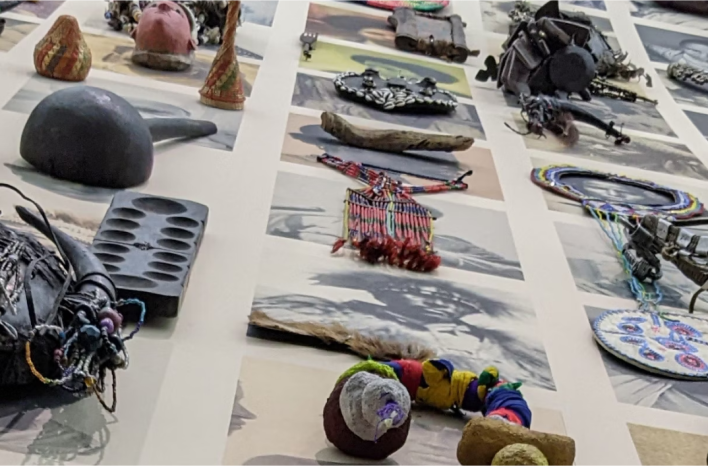
The Johannesburg Art Gallery holds roughly 10,000 works, and most visitors will only ever see a fraction of them. The rest sits in storage, out of public reach. Beyond the Gallery: Reimagining the Johannesburg Art Gallery (JAG), which ran in The Atrium at Keyes Art Mile in Rosebank from 30 July to 29 August 2026, started from a question that challenges that arrangement: what if every object JAG holds were on permanent display, all at once?
The central provocation
The exhibition brought together speculative architectural proposals by third-year students in the University of Johannesburg’s Department of Architecture, developed earlier in the year under a brief set by Senior Lecturer Alexander Opper. Opper asked the students to rethink the institution from first principles and to design a museum that begins with transparency and permanent visibility, where the conventional museum begins with storage and curatorial selection.
The proposals treated openness as the core architectural problem to solve, and few of them stopped at the front door. Many questioned the assumption that reviving JAG is simply a matter of restoration, that fixing the structure will save the institution. They approached it as a regenerative design problem, asking what the gallery could give back to Joubert Park and the city around it, and how it might re-root itself there. Their argument was that JAG’s future depends as much on its relationship with the neighbourhood as on the walls that contain it. That places the gallery as one participant in the wider work of co-creating neighbourhoods, an idea Keyes Art Mile has put at the centre of its own thinking.
Co-creation in practice
Throughout its run, the exhibition was set up as an open conversation. Visitors were invited to add their own readings of what JAG could become alongside the students’ proposals, and the programming at Keyes Art Mile followed suit. During Keyes Art Night on 6 August, the Makers’ Table turned The Atrium into a space for collective imagining. A collaboration between Open Window and Johannesburg In Your Pocket, brought together by TomorrowCo, it invited visitors to make miniature artworks for an imagined future institution, the Joburg People’s Gallery. It was co-creation at a small scale: the public contributing directly to a picture of a more open and accessible cultural institution.
The closing panel
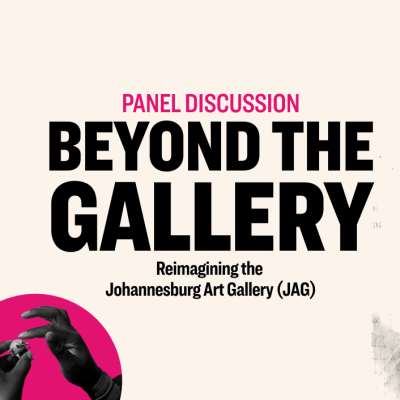
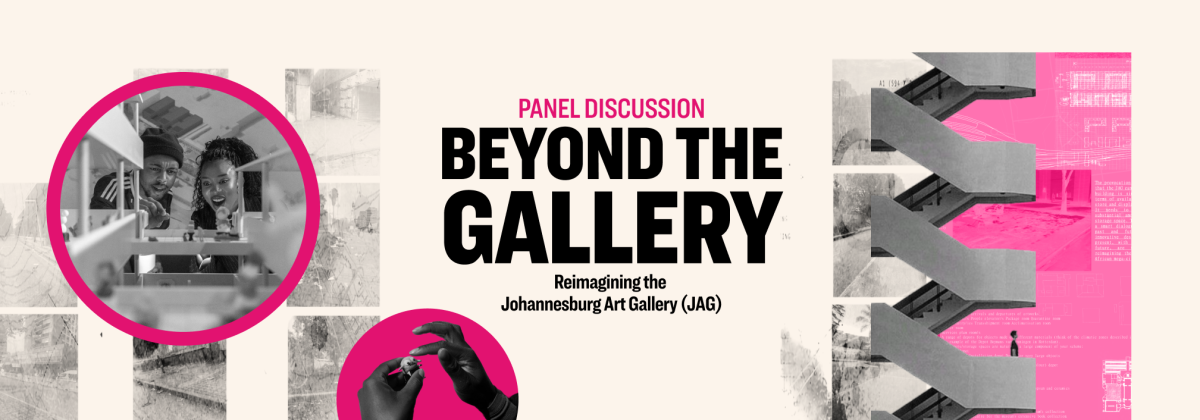
The exhibition closed on Saturday 29 August with a public panel discussion that carried the students’ question into policy, heritage practice and cultural strategy. Opper, who moderated, asked the panel to treat JAG’s current state of decay as a starting point rather than a verdict: what if the decay were an opportunity to radically reinvent public museum futures in Johannesburg and South Africa?
The panel spanned art, architecture, heritage and cultural criticism: Ashraf Jamal, Research Associate in Visual Identities in Art and Design (VIAD) at UJ; heritage specialist and architectural historian Monika Läuferts le Roux of tsica heritage consultancy; museum curator and cultural strategist Pholoso More; architect and heritage practitioner Brendan Hart of Mayat Hart Architects + Heritage Consultants; and writer and art critic David Mann, resident writer at The Centre for the Less Good Idea. They were joined by two of the students behind the work on the walls, Byron Stroud and Hasina Sayed Mohammed.
Hart, who, with Läuferts le Roux, is part of the team the city has appointed to rethink the gallery, set the tone. “Instead of seeing it as this point of despair, we’ve been offered a very privileged opportunity to reinvent and reimagine not just what the gallery can be, but what the city can be.”
Läuferts le Roux made the case for touching the building. It is an unusual position for a heritage specialist, and she framed it as a message to the students. “I said to the students, don’t be afraid to plug on something contemporary. We shouldn’t use the JAG building as something holy which you can’t touch.”
Stroud, whose proposal grew the museum outwards through a biomimetic structure, brought the conversation back to Joubert Park. “There’s a great disconnect between the gallery and the park,” he said, pointing to the chess club that meets in the park at least twice a week, a community already gathered around culture within sight of a gallery it does not enter.
The panel’s answer to the students’ opening question came from Hart. “The treasure of the building is actually what is hidden away. That’s why this project is so provocative, because it’s challenging that and saying, let’s put it all out.”
Co-creating creative neighbourhoods
Taken together, the exhibition and its closing panel reflect an idea Keyes Art Mile is building towards: that regenerative design for a cultural institution is inseparable from the life of the neighbourhood around it. Mann put it in terms of storytelling. Showing everything at once, he said, is an invitation to make meaning together: “We all take the pieces and co-author the meaning and co-author the story. It’s a wonderful invitation to think collaboratively.” In this reading, reimagining JAG is an act of co-creating creative neighbourhoods, with the gallery’s future bound up with the park, the streets and the public it serves. The same thinking shapes Keyes Art Mile itself, where exhibitions, Art Nights and markets give the people who use the precinct a hand in making it.
Opper closed the discussion by describing it as the first of a series, with the next conversation planned for JAG itself. In the meantime, the students’ proposals remain available on the ReJAG Commons site. The digital archive keeps the projects in circulation and offers a way to revisit how the students imagined the future of JAG, its collection and its relationship to the city.
Beyond the Gallery was a collaboration between UJ’s Department of Architecture and Keyes Art Mile, supported by Johannesburg In Your Pocket, the French Institute of South Africa (IFAS), Corobrik, the South African Institute of Architects (SAIA), the Gauteng Institute for Architecture (GIfA) and IQOQO.