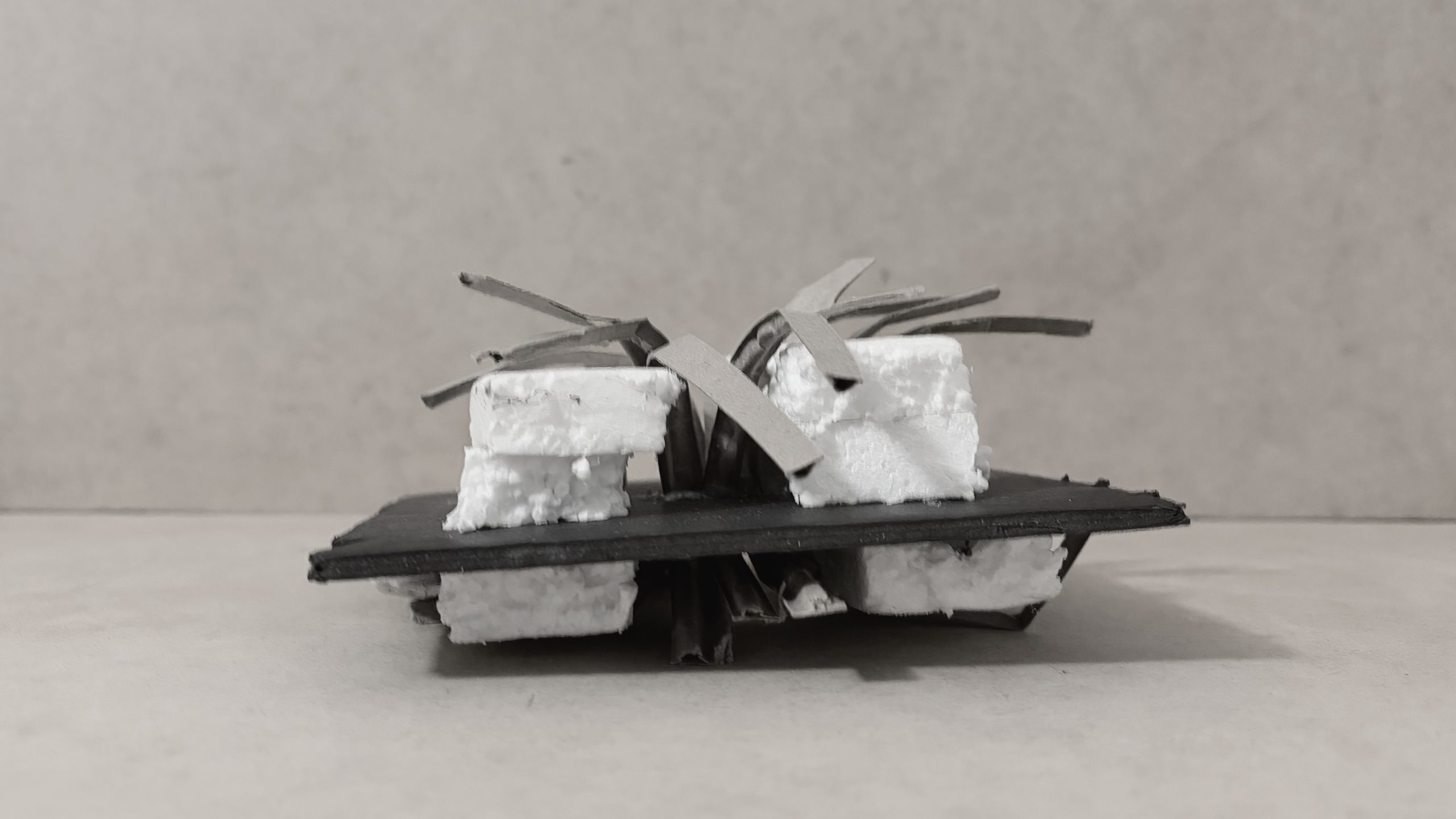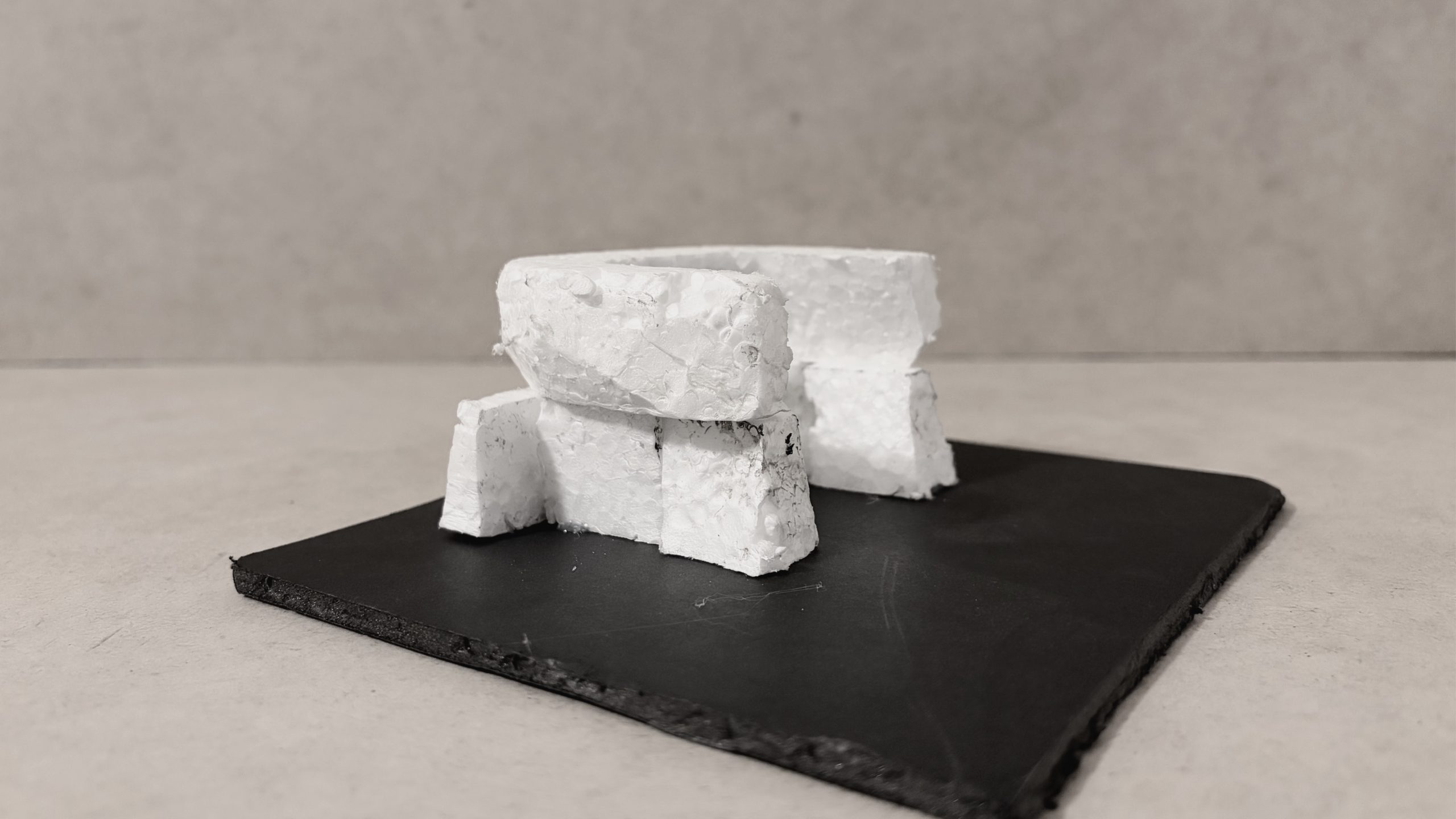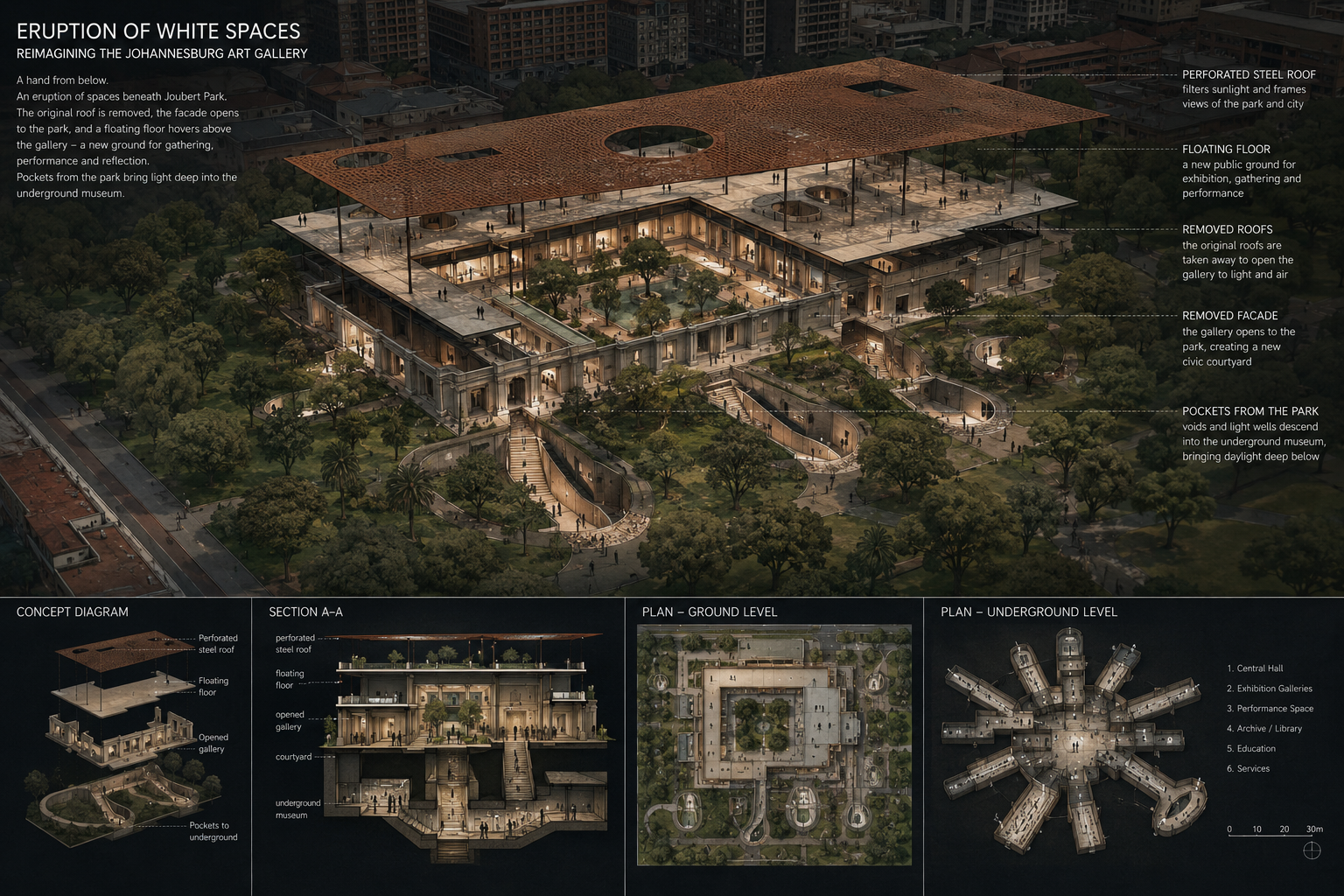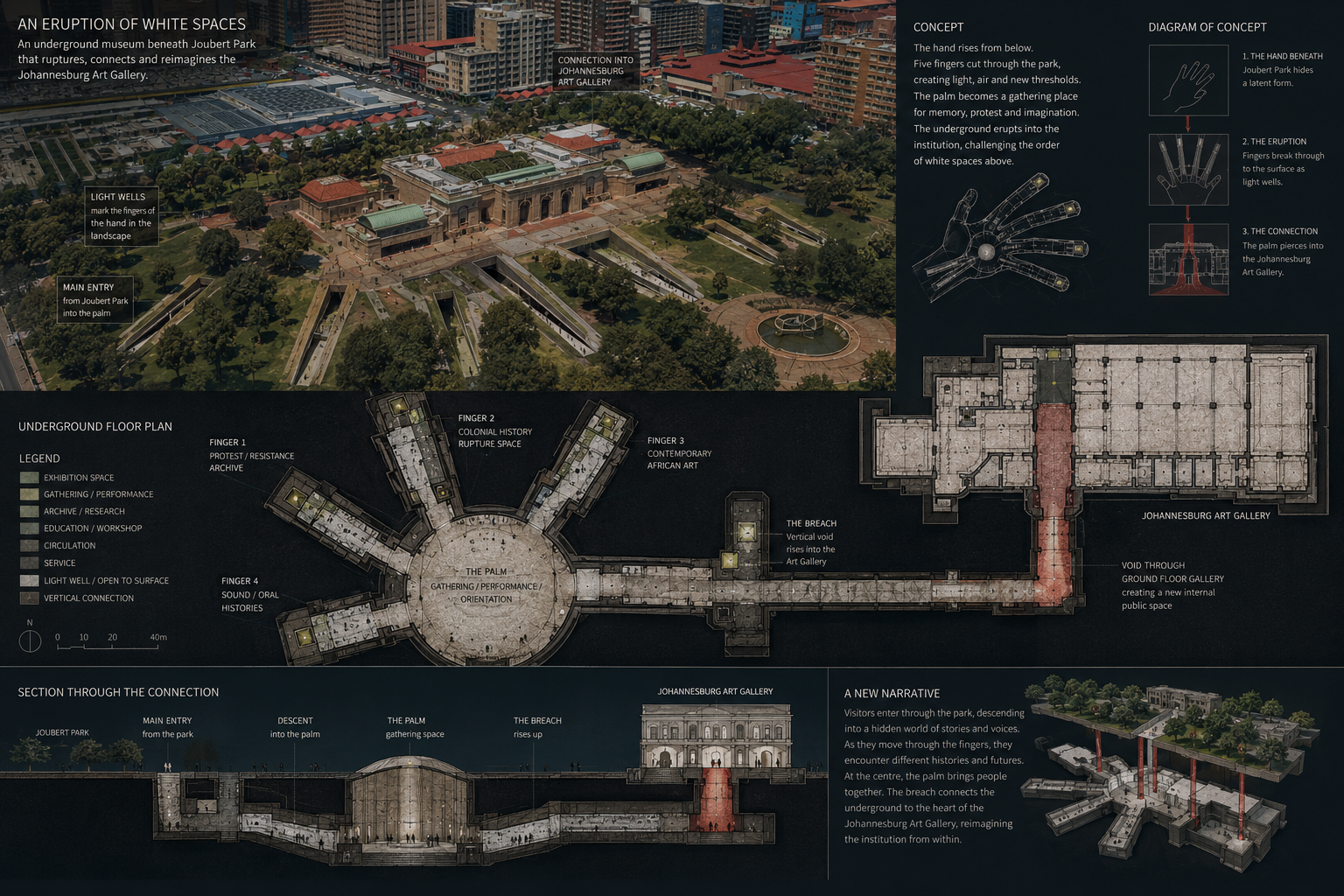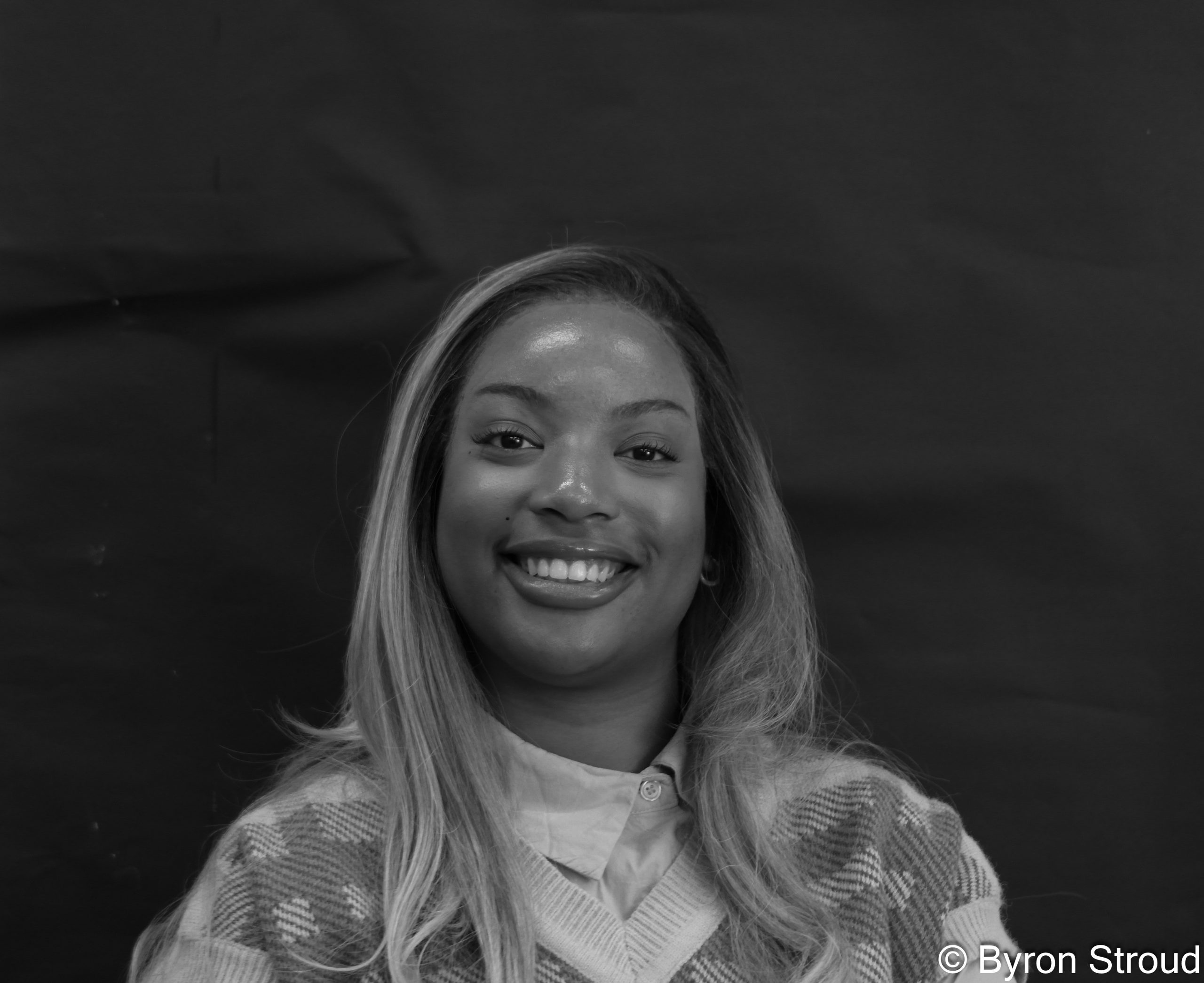
UJ DOA Architecture - THIRD YEAR DEGREE
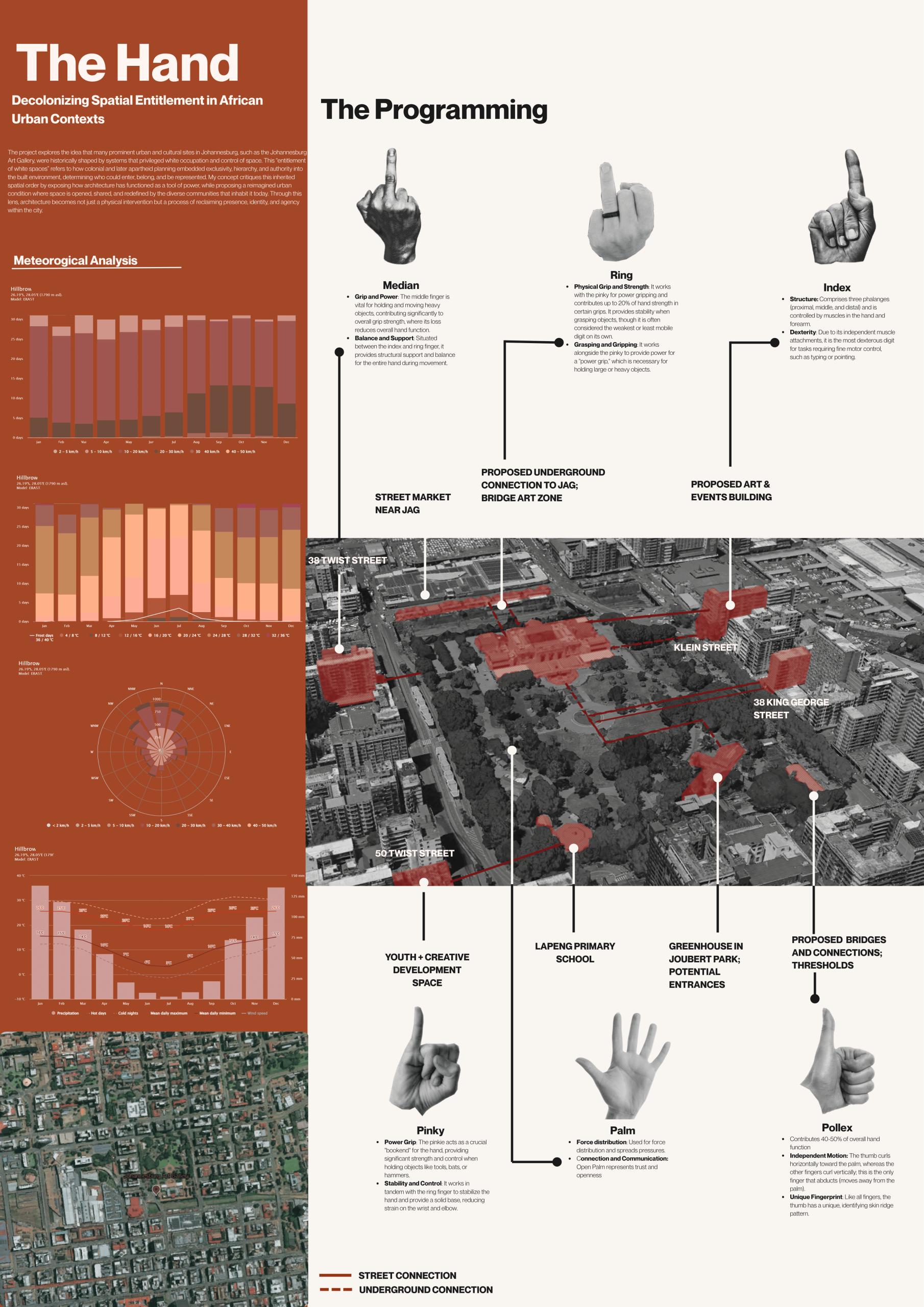
This project investigates the historical and spatial legacy of Johannesburg’s prominent urban and cultural institutions, with particular reference to the Johannesburg Art Gallery, as sites shaped by colonialism and apartheid-era planning. These systems of governance established and reinforced patterns of spatial segregation that privileged white occupation, ownership, and control over the urban environment. The concept of the “entitlement of white spaces” refers to the historical processes through which authority, exclusivity, and social hierarchy were embedded within the built environment, determining not only who had access to these spaces but also who was permitted to participate in the cultural, social, and political narratives they represented. Consequently, architecture functioned as a mechanism of power, reinforcing systems of exclusion while legitimising unequal relationships between communities and the city.
This project critically examines these inherited spatial conditions by questioning the ideological foundations upon which such institutions were established. Rather than viewing architecture as a neutral backdrop, it positions the built environment as an active participant in shaping social relations, identity, and patterns of inclusion and exclusion. The Johannesburg Art Gallery serves as a case study through which broader issues of spatial justice, historical memory, and urban transformation are explored, revealing how cultural institutions can simultaneously embody artistic significance and histories of marginalisation.
This project emerged from my reflection on how Johannesburg’s urban and cultural spaces continue to carry the imprint of colonialism and apartheid, and how this history is still visible in the Johannesburg Art Gallery. In studying the gallery, I began to interpret it not only as a cultural institution, but also as a space shaped by systems that historically privileged white occupation, ownership, and control. The idea of the “entitlement of white spaces” helped me understand how exclusivity, authority, and hierarchy were embedded in the building and its surrounding urban context, influencing who could access the space, who felt they belonged there, and whose histories were made visible. This shifted my understanding of the gallery from being a neutral architectural object to one that actively reflects broader social and political conditions.
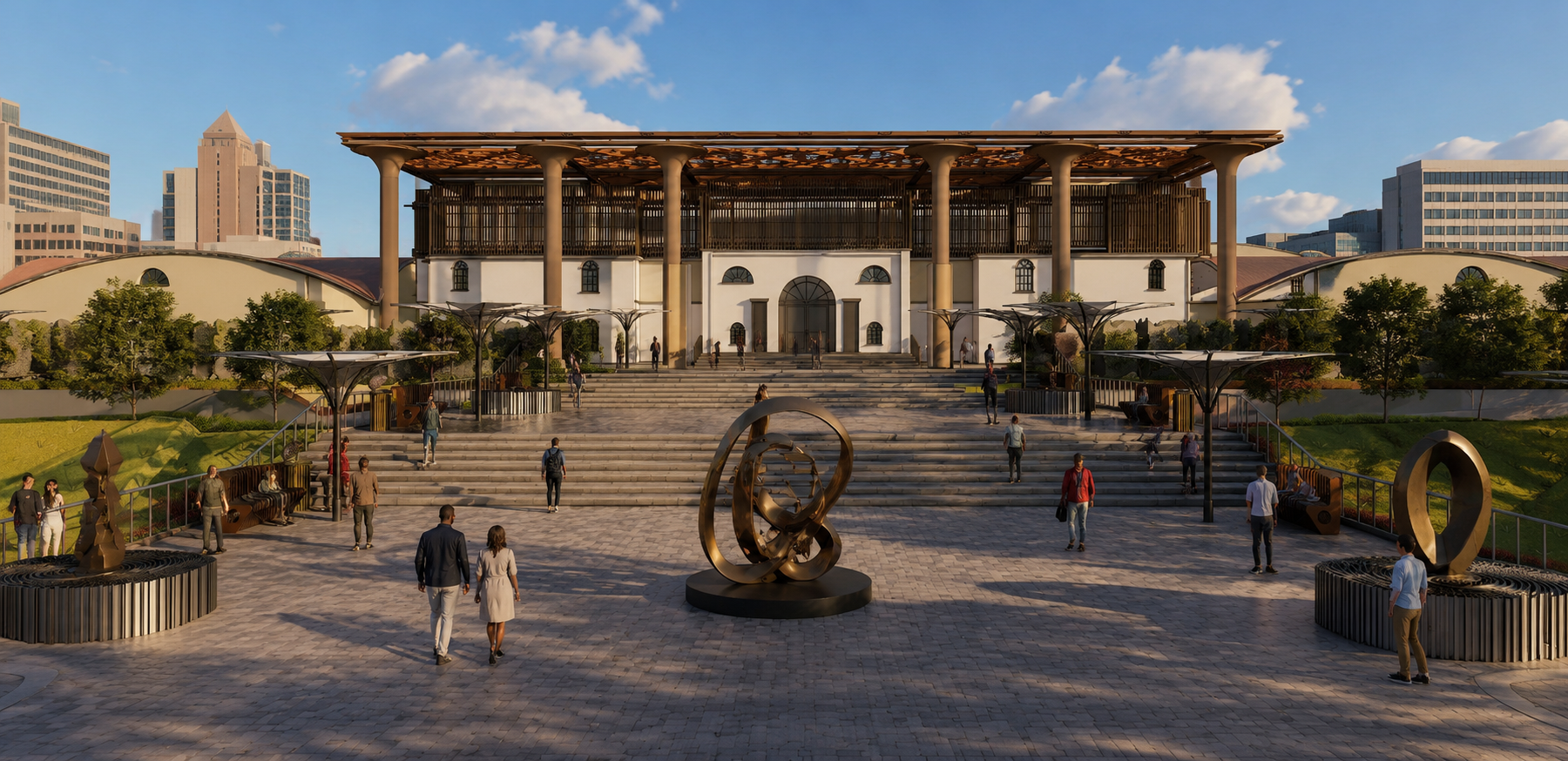
The Johannesburg Art Gallery serves as a powerful example of how colonial values were embedded within Johannesburg’s cultural and urban development. Established during British colonial rule and funded by the city’s mining elite, the gallery reflected European ideals of culture, architecture, and civic identity while largely excluding African artistic traditions and communities. Its monumental architecture and institutional role reinforced systems of cultural authority that privileged white occupation and representation within the city. In the context of this project, the gallery is understood not only as a cultural institution but as a symbol of the historical “entitlement of white spaces” where architecture and urban planning were used to shape access, belonging, and power. By critically engaging with this legacy, the project proposes a reimagining of the Johannesburg Art Gallery as an inclusive and accessible civic space that acknowledges its colonial past while creating new opportunities for collective ownership, representation, and spatial justice.
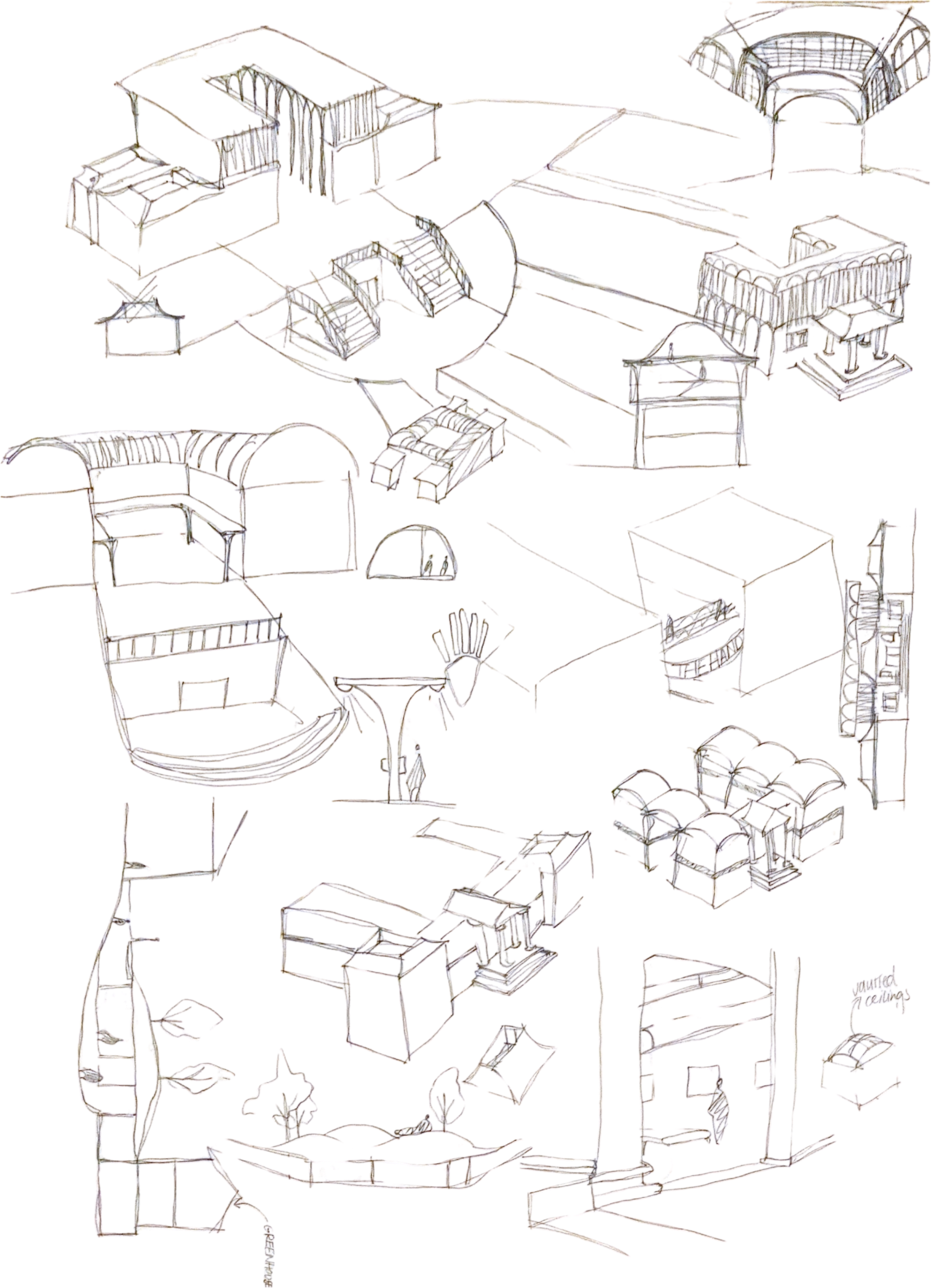
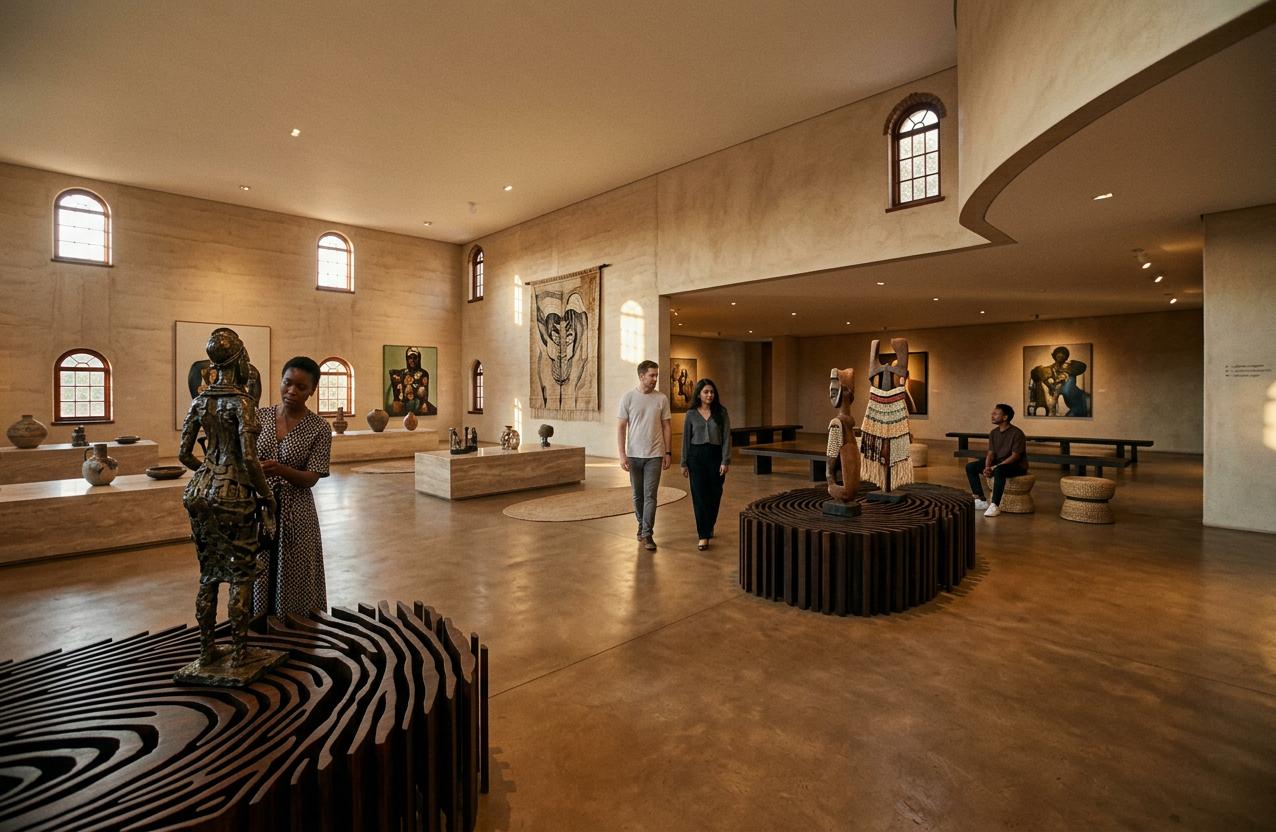
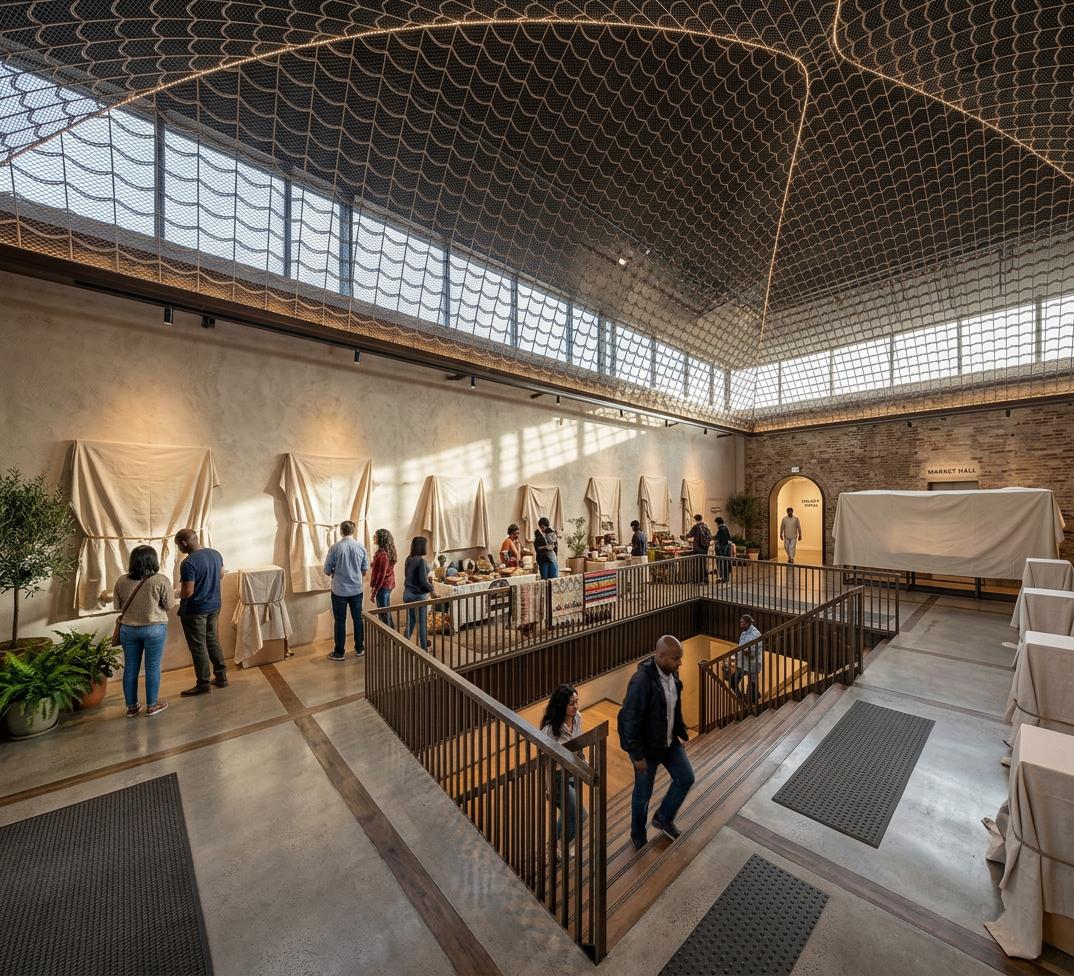
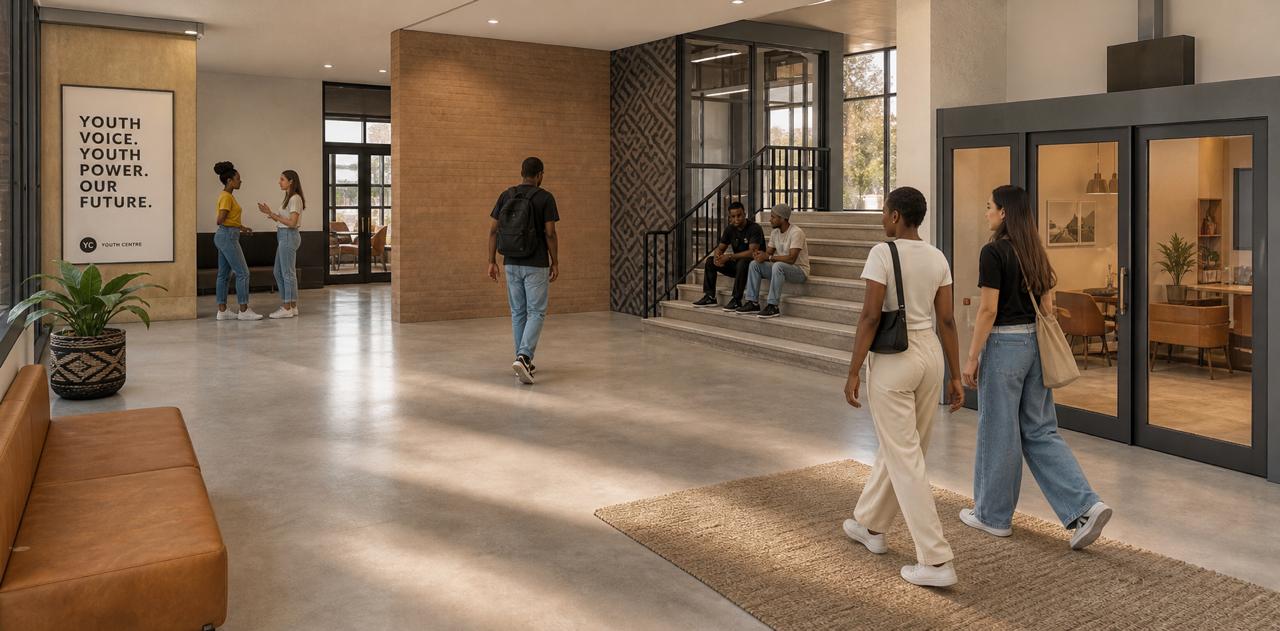
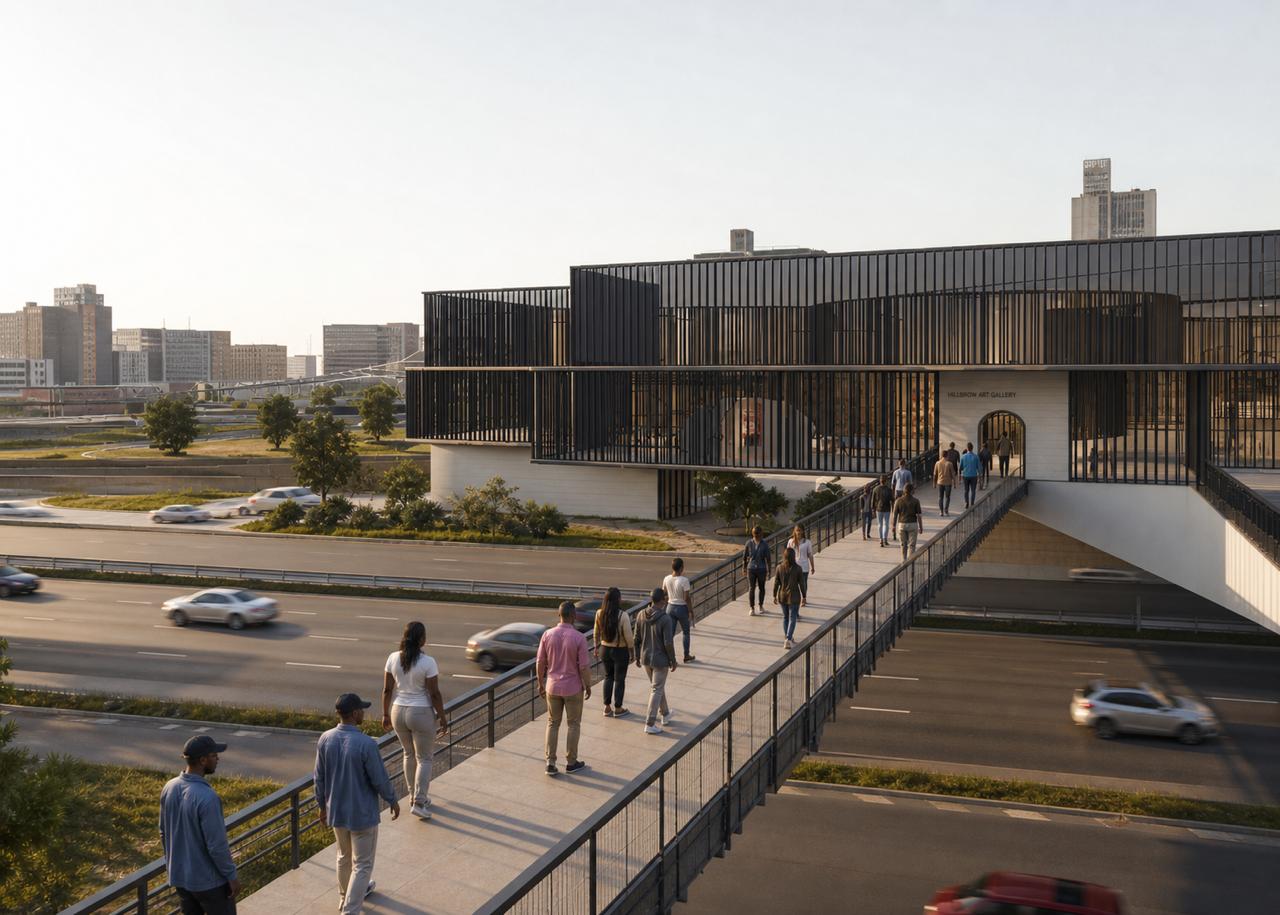
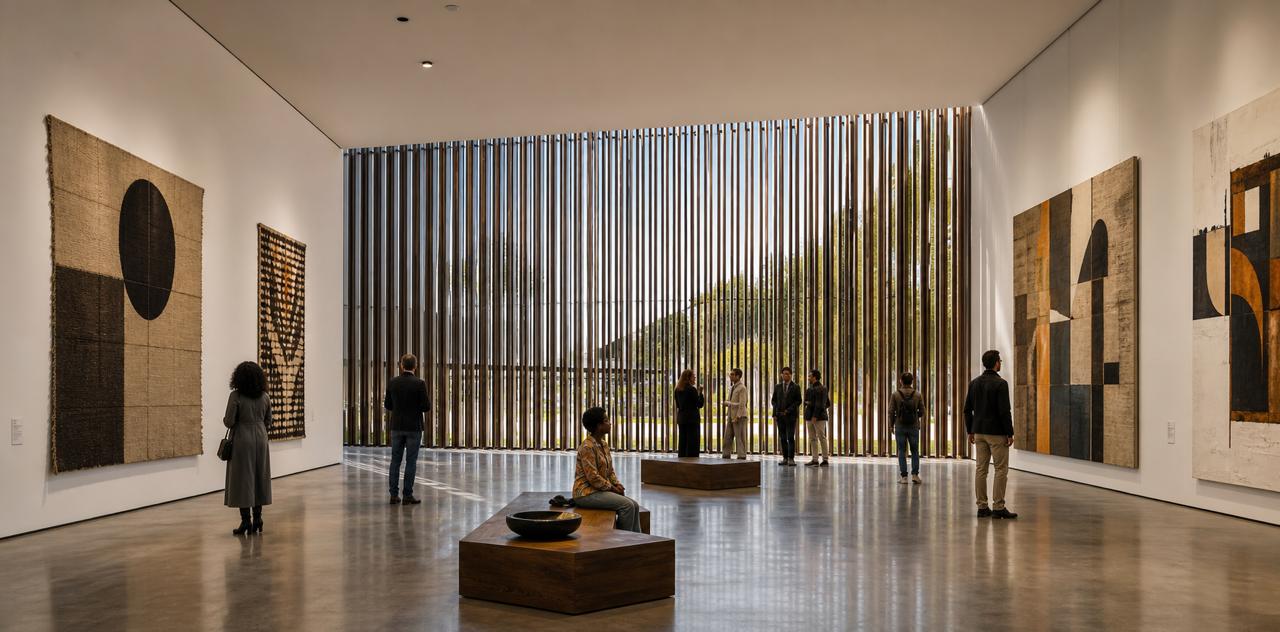
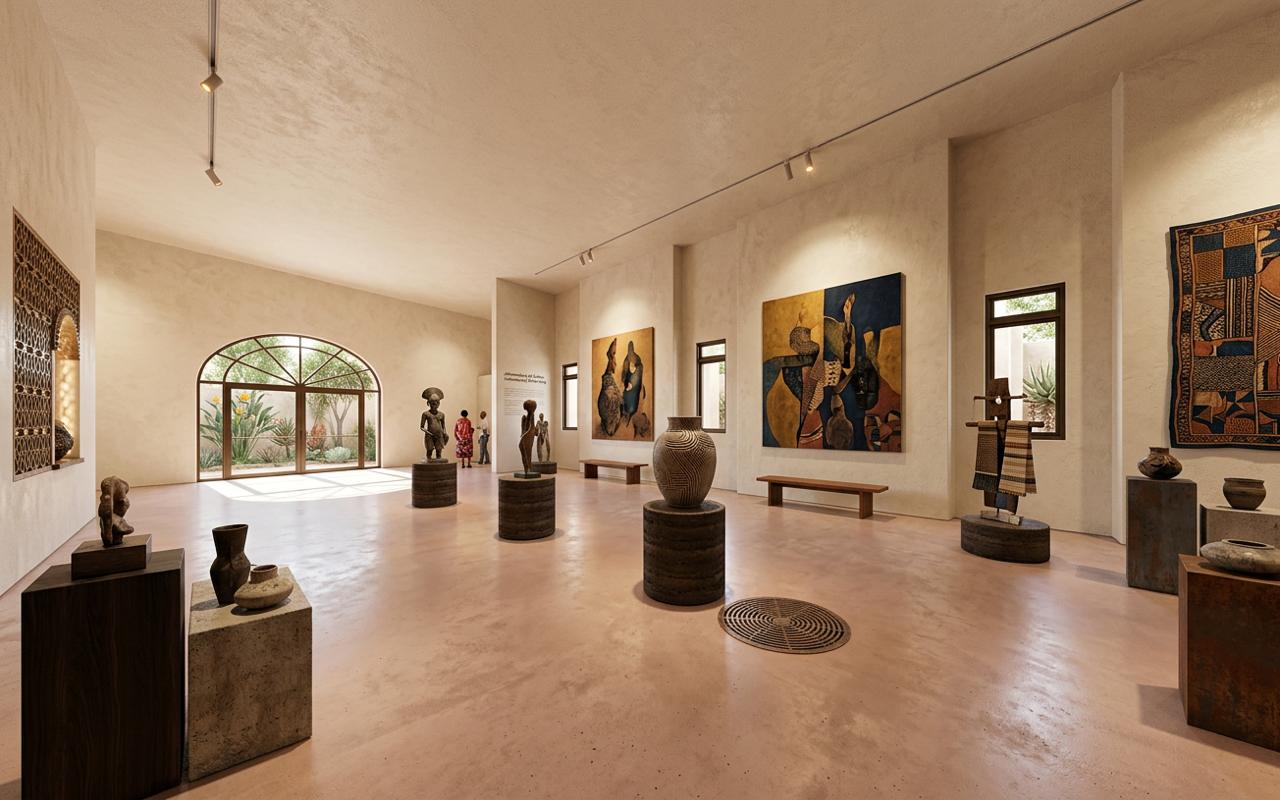
From this interpretation, I began to think about how the Johannesburg Art Gallery could be changed to better respond to the city and the people who inhabit it today. Rather than accepting the inherited boundaries and exclusions embedded in its current form, my proposal seeks to reimagine the gallery as a more open, shared, and inclusive space. Realising that my interpretation of inclusion depicts using surrounding buildings to solve the problems found in Hillbrow, whether it be homelessness, lack of children educational resources or any activated pause spaces in Hillbrow. Architecture becomes more than a formal intervention, it becomes a means of challenging the gallery’s historical associations and reshaping it into a place that welcomes diverse users, encourages interaction, and creates new relationships between people, place, and culture. Ultimately, this project reflects my belief that by critically interpreting the current condition of the Johannesburg Art Gallery, it is possible to propose a more equitable and representative future for it—one in which the building contributes not only to cultural expression, but also to spatial justice, collective belonging, and a more inclusive urban identity. This proposal helped me realise how public buildings cannot just be buildings, but be looked at through the lens of an intervention. Private property serves only those with access to it, whereas the public is for everyone and therefore needs to be inclusive of all users.