When we imagine the future of African cities, too often the images that come to mind are glass skyscrapers, sterile concrete highways, and carbon copies of Western urban sprawl. These visions suggest that progress must always resemble Europe or North America, as if modernity is only valid when it mimics the West. But what if we turned the question on its head? What if the African future was rooted in African pasts, in indigenous knowledge systems, spiritual philosophies, and architectural practices that have long sustained life on this continent?
This is the provocation of Afrofuturist housing: to dream of homes and cities that are not about catching up with someone else’s blueprint but about excavating the wisdom already in our soil.
Indigenous knowledge as design technology
For centuries, African societies built environments that were not only functional but ecological, spiritual, and communal. Consider the rondavel, with its circular form echoing cycles of life and community, or the Dogon people’s earthen architecture in Mali, where dwellings are aligned with cosmic and agricultural rhythms. These are not quaint relics; they are blueprints of a sustainable design philosophy that balanced human need with environmental harmony.
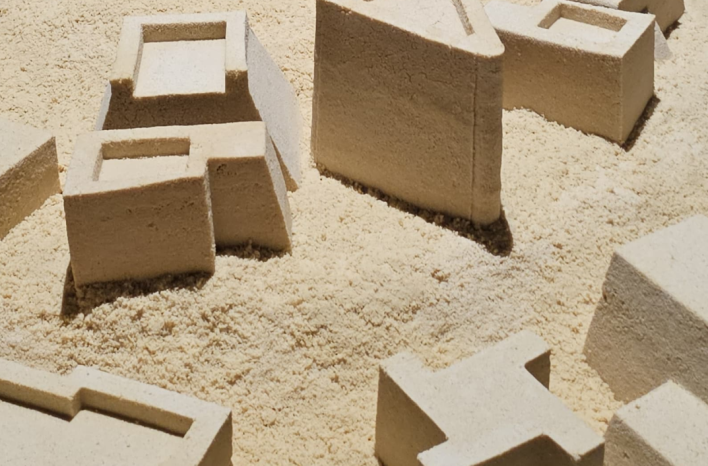
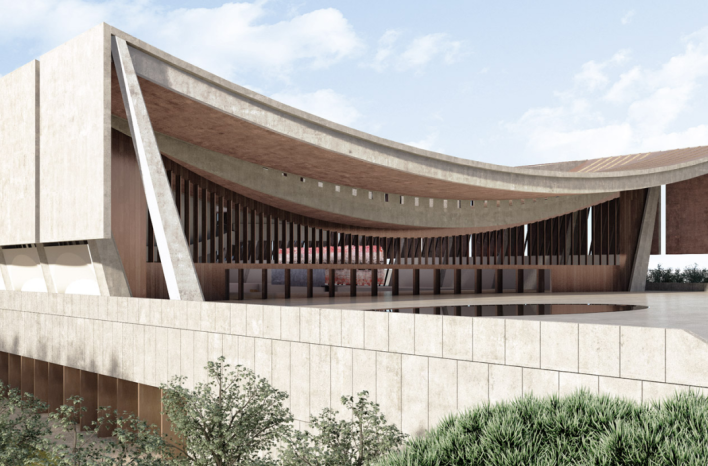
Western standards – steel, glass, concrete – are celebrated as universal, but they are often alien in African contexts, demanding imported materials, heavy energy consumption, and alienated living. Indigenous designs, on the other hand, used local resources, adapted to the climate, and reinforced cultural values of kinship and collective life. Afrofuturist homes would not romanticise the past, but they would update these principles for contemporary needs: think solar-powered rondavels, mudbrick high-rises, or digital networks embedded in structures that breathe with the land.
A different relationship to space
The Western model of housing is highly individualistic: a house for one nuclear family, a city designed for cars and privacy. Indigenous African models often prioritised shared courtyards, communal kitchens, and open spaces where generations could gather. Imagine if future African cities were designed around these logics — spaces that encouraged care, conversation, and collective responsibility rather than isolation.
In many African cosmologies, the home is not just a shelter but a spiritual site. The arrangement of rooms, the placement of a hearth, the orientation of a doorway were tied to ancestral traditions. An Afrofuturist architecture could reintroduce this sacredness into design, rejecting the sterility of modern grids in favour of fluid, symbolic spaces.
Reclaiming the aesthetics of belonging
If African futures were built from African pasts, interiors would not be dominated by imported aesthetics – Scandinavian minimalism or American suburbia. Instead, walls could be adorned with locally woven textiles, furniture shaped by indigenous craft, and layouts inspired by ritual and rhythm. This would not be nostalgia, but a reclamation of aesthetics that affirm belonging in a globalised world where African design is too often treated as a trend rather than a philosophy.
A radical reorientation
Afrofuturist homes prompt us to reconsider the concept of progress itself. Do we measure it in taller skyscrapers and faster highways? Or in designs that nourish community, heal the environment, and honour cultural memory? By rooting the future in indigenous knowledge, we might build cities that are not just livable but soulful – where technology does not erase tradition but grows from it.
To speculate on Afrofuturist housing is to imagine African cities that finally feel like themselves. Not shadows of the West, not imitations of another’s dream, but futures born from ancestral soil, carried forward by innovation, and designed to hold both memory and possibility.